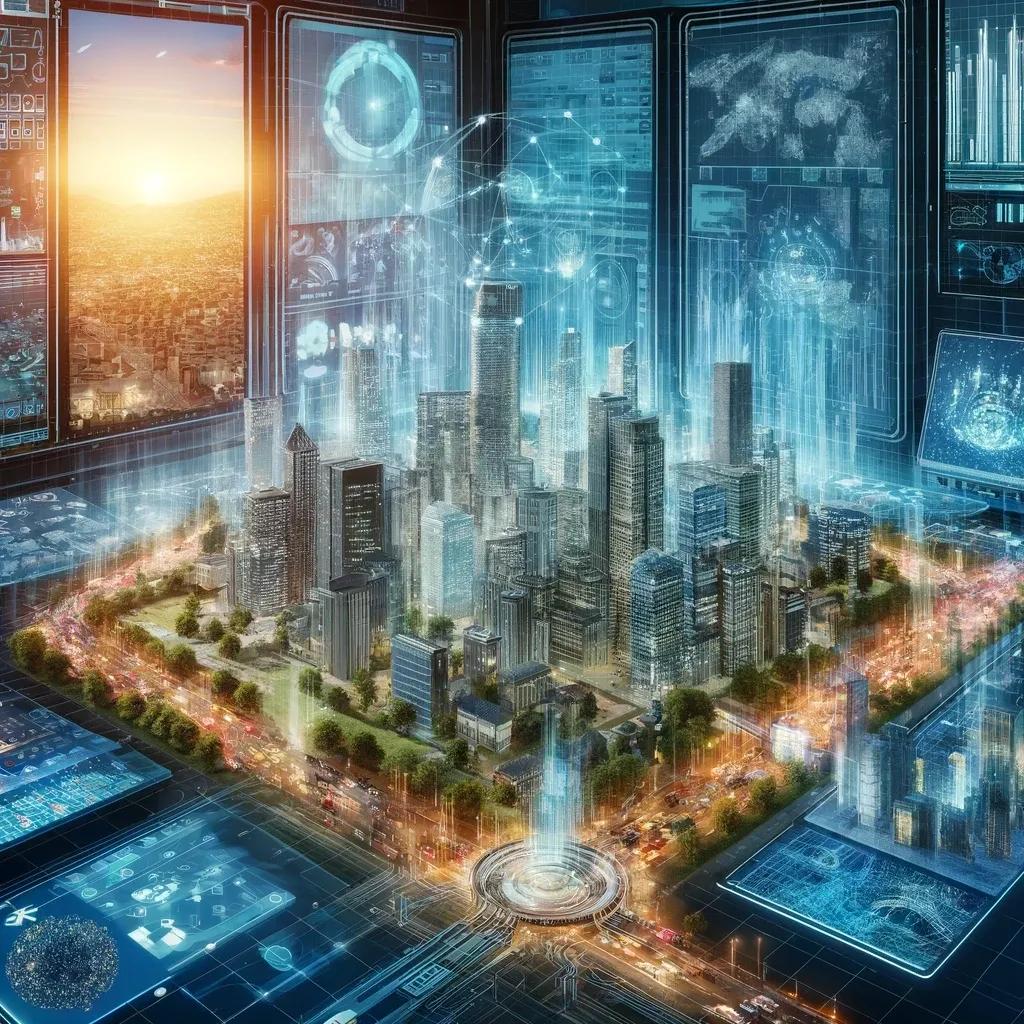
In the evolving landscape of digital transformation, the concept of Digital Twins has emerged as a cornerstone in optimizing systems, processes, and services across various industries. At the heart of this innovation lie advanced visualization techniques, which are essential for interpreting complex data and facilitating decision-making. This article delves into the sophisticated visualization strategies that are integral to leveraging Digital Twins to their fullest potential.
Introduction to Digital Twins
A Digital Twin is a virtual replica of a physical entity, system, or process, bridging the physical and digital worlds through real-time data streams. This dynamic model allows for simulations, analyses, and optimization of systems in a virtual environment, mirroring their real-world counterparts. The utility of Digital Twins spans across industries, including manufacturing, healthcare, urban planning, and infrastructure management, underscoring their transformative potential.
The Role of Advanced Visualization in Digital Twins
Visualization in the context of Digital Twins goes beyond mere graphical representation; it's about interpreting and interacting with data in ways that enhance understanding and actionable insights. Advanced visualization techniques harness the power of data analytics, artificial intelligence (AI), and machine learning (ML) to create immersive, interactive, and intuitive experiences for users.
1. 3D Modeling and Simulation
3D modeling is fundamental to Digital Twins, providing a spatially accurate representation of physical assets. These models are not static; they are animated with real-time data to simulate real-world conditions. Through simulations, stakeholders can predict outcomes, experiment with scenarios, and make informed decisions without the constraints of the physical world.
2. Augmented Reality (AR) and Virtual Reality (VR)
AR and VR elevate the visualization experience by immersing users in a simulated environment that mimics real-life conditions. AR overlays digital information onto the physical world, enhancing real-world interactions with virtual data. VR, on the other hand, creates a fully immersive experience, enabling users to navigate and interact with digital twins in a controlled, virtual space. These technologies facilitate a deeper understanding of complex systems and environments, providing a hands-on experience that traditional visualization methods cannot offer.
3. Geospatial Mapping
Integrating geospatial data into Digital Twins allows for the visualization of assets and phenomena in their geographical context. This is particularly useful in urban planning, environmental monitoring, and infrastructure management. Geospatial mapping enables the visualization of spatial relationships and patterns, enhancing the situational awareness and strategic planning capabilities of organizations.
4. Real-time Data Visualization
At the core of Digital Twins is the ability to visualize data in real time, enabling immediate insights and actions. Dashboards, heat maps, and dynamic charts transform raw data into understandable and actionable information. This real-time capability is crucial for monitoring systems, anticipating issues, responding to changes efficiently, minimizing risks and optimizing performance.
5. Interactive User Interfaces (UIs)
Interactive UIs are crucial for the effective use of Digital Twins, allowing users to explore, manipulate, and analyze data intuitively. These interfaces support a wide range of interactions, from simple queries to complex simulations, making advanced analytics accessible to decision-makers. Customizable dashboards and control panels enable users to focus on the information that matters most, tailoring the visualization experience to their specific needs and objectives.
Challenges and Future Directions
While advanced visualization techniques offer significant benefits, they also present challenges. These include the need for substantial computational resources, the integration of disparate data sources, and ensuring data accuracy and security. Overcoming these challenges requires ongoing innovation, with trends pointing towards more immersive experiences, greater integration of AI and ML for predictive analytics, and enhanced collaboration tools.
In conclusion, advanced visualization techniques are transforming the way we interact with Digital Twins, offering unparalleled insights into the physical and digital worlds. By harnessing the power of 3D modeling, AR/VR, geospatial mapping, real-time data visualization, and interactive UIs, organizations can unlock the full potential of Digital Twins. As these technologies continue to evolve, they will play a critical role in driving efficiency, innovation, and resilience across industries. The future of Digital Twins lies in the continued advancement of visualization technologies, paving the way for more intuitive, immersive, and insightful digital experiences.