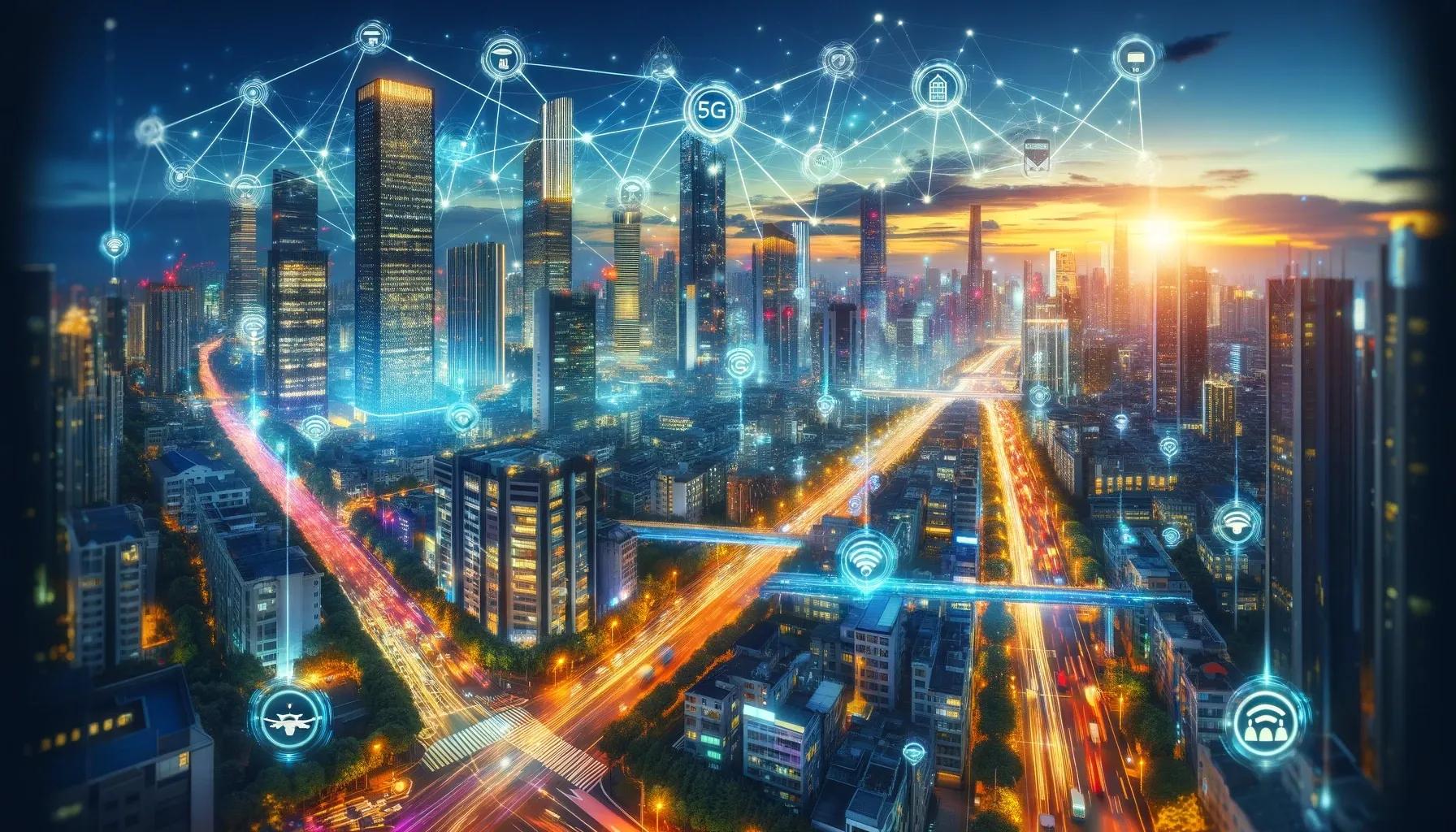
The advent of 5G networks marks a pivotal shift in the realm of telecommunications, heralding a new era of smart cities characterized by unprecedented connectivity, efficiency, and sustainability. As the latest generation in mobile network technology, 5G offers significantly faster data speeds, reduced latency, and higher capacity than its predecessor, 4G LTE. This leap in network performance is not just an incremental update; it's the foundation upon which future smart cities will be built, impacting every facet of city infrastructure and services, from traffic management to public safety and beyond.
Unleashing the Potential of Urban Infrastructure with 5G
The integration of 5G technology into city infrastructure signifies a transformative step towards realizing the vision of smart cities. At its core, a smart city leverages digital technology and connectivity to enhance the quality of life, economic growth, and environmental sustainability. 5G networks are poised to become the backbone of these smart cities by facilitating a seamless and efficient infrastructure that can adapt to the needs of its inhabitants in real-time.
Enhanced Connectivity and Data Flow
One of the most significant impacts of 5G technology on city infrastructure is the enhanced connectivity and data flow it provides. With its ability to support a massive number of devices simultaneously, 5G enables the widespread deployment of Internet of Things (IoT) devices throughout the city. From street lights and traffic sensors to water meters and air quality monitors, these IoT devices can collect and transmit data in real-time, providing city officials and planners with valuable insights into urban life and infrastructure needs.
Smart Traffic Management
5G networks facilitate smart traffic management systems that can dramatically reduce congestion and improve road safety. By leveraging real-time data from traffic cameras, sensors, and GPS data from vehicles, these systems can optimize traffic flow, adjust traffic signals dynamically, and provide real-time navigation updates to drivers. The reduced latency of 5G ensures that these adjustments are made almost instantaneously, paving the way for smoother traffic conditions and potentially even supporting the future integration of autonomous vehicles into the urban landscape.
Public Safety and Emergency Services
The role of 5G in enhancing public safety and emergency services cannot be overstated. High-speed, reliable communication is critical in emergency situations, and 5G networks offer the bandwidth and low latency required for an effective response. For example, 5G can enable real-time video streaming from surveillance cameras or drones to emergency control rooms, providing first responders with live updates from the scene. Additionally, 5G can support advanced emergency alert systems that disseminate critical information to the public quickly and efficiently.
Sustainable Urban Development
Sustainability is a core component of the smart city vision, and 5G networks play a crucial role in enabling environmentally friendly urban development. By optimizing resource consumption and reducing waste, 5G can help cities reduce their carbon footprint. For instance, smart grids powered by 5G can improve energy distribution efficiency, while IoT-enabled systems can monitor and manage water usage, waste collection, and air quality. These technologies, underpinned by 5G, not only contribute to a healthier environment but also promote a higher quality of life for city residents.
The Challenges Ahead
Despite the promising benefits of 5G for smart cities, there are challenges to be addressed. The deployment of 5G infrastructure, including small cells and fiber optics, requires significant investment and strategic planning. Additionally, concerns around data privacy and security need to be rigorously managed, given the vast amount of sensitive information that will be transmitted across these networks.
Furthermore, there is the issue of digital equity. Ensuring that all areas of a city, including underserved communities, have access to 5G technology is critical for the inclusive growth and development of smart cities. Policymakers and city planners must work closely with technology providers and community leaders to address these challenges and ensure that the benefits of 5G are accessible to all.
In conclusion, 5G networks are set to become the backbone of smart cities, driving innovations that will transform urban living. By enhancing connectivity, optimizing city services, and promoting sustainable development, 5G holds the promise of making cities more livable, efficient, and resilient. As we stand on the cusp of this new era, the collaborative efforts of governments, technology providers, and citizens will be paramount in realizing the full potential of smart cities. The journey towards this future is complex and fraught with challenges, but the rewards—smarter, safer, and more sustainable urban environments—are undeniably worth the effort.