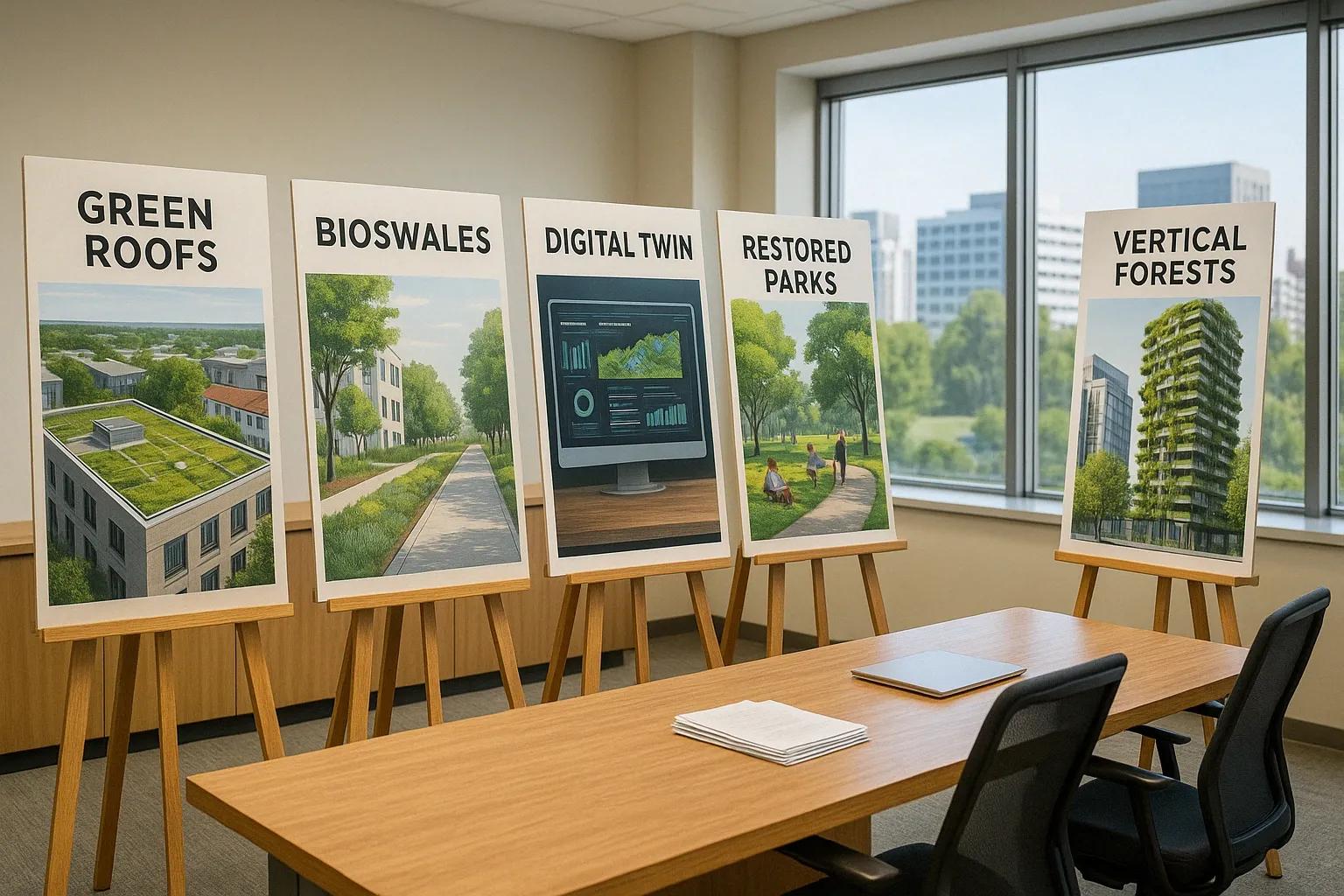
The urgency to embed nature into urban development is clear, but many cities are still figuring out how to move from intent to implementation.
To succeed, they need actionable, replicable, and technology-enabled solutions that fit within real-world planning and budgetary frameworks.
Below are five high-impact strategies that cities can adopt right now to fast-track their journey toward a nature-positive future.
1. Create a Nature-Positive Urban Code
Update zoning laws and building codes to require:
Green roofs and walls
Minimum tree cover ratios
Permeable pavements
Biodiversity-sensitive construction
Technology Enabler: BIM integrated with environmental parameters allows cities to simulate compliance and optimize designs during planning.
2. Build a Unified Green Infrastructure Map
Consolidate all natural assets, parks, wetlands, urban forests, into a central, citywide digital map to:
Identify underutilized spaces
Plan green corridors
Monitor land use and conservation efforts
Technology Enabler: Geospatial data platforms and UAV imagery create high-resolution, real-time baselines for smarter decision-making.
3. Develop a Nature-Based Project Pipeline
Move beyond ad hoc projects by creating a long-term, tiered project pipeline with:
Small, medium, and large-scale green infrastructure initiatives
Environmental KPIs and cost-benefit analyses
Blended finance-ready documentation
Technology Enabler: Digital Twins and AI help cities simulate, prioritize, and financially package multi-benefit projects.
4. Mainstream Nature into Budgeting and Procurement
Make nature integration mandatory in public procurement, capital investment programs, and infrastructure maintenance budgets.
Technology Enabler: AI-powered decision support tools and dashboards allow cities to forecast long-term financial and ecological returns from different investment choices.
5. Use Real-Time Data for Impact Verification
Move from one-time assessments to ongoing monitoring of urban ecosystem health:
Tree growth
Air quality
Surface temperature
Water retention
Technology Enabler: IoT sensors + UAV monitoring offer scalable, low-cost, real-time impact tracking that supports investor confidence and public transparency.
Role of Digital Technologies
Each of the five strategies becomes more feasible and scalable when paired with the right tools:
Solution: Enabling Technology
Urban Code Reform: BIM + Policy Mapping
Green Infrastructure Mapping: GIS + UAVs
Project Pipeline: Digital Twins + AI
Budget Mainstreaming: AI Dashboards
Impact Monitoring: IoT + UAVs
This integration ensures nature-positive planning is not only ambitious but executable.
Conclusion
Cities don’t need to wait for the perfect moment or large funding packages to start.
They can begin with practical, tech-enabled steps that deliver real impact, on the ground and on paper.
By institutionalizing these five strategies, cities can move nature from pilot to policy, and from idea to infrastructure.