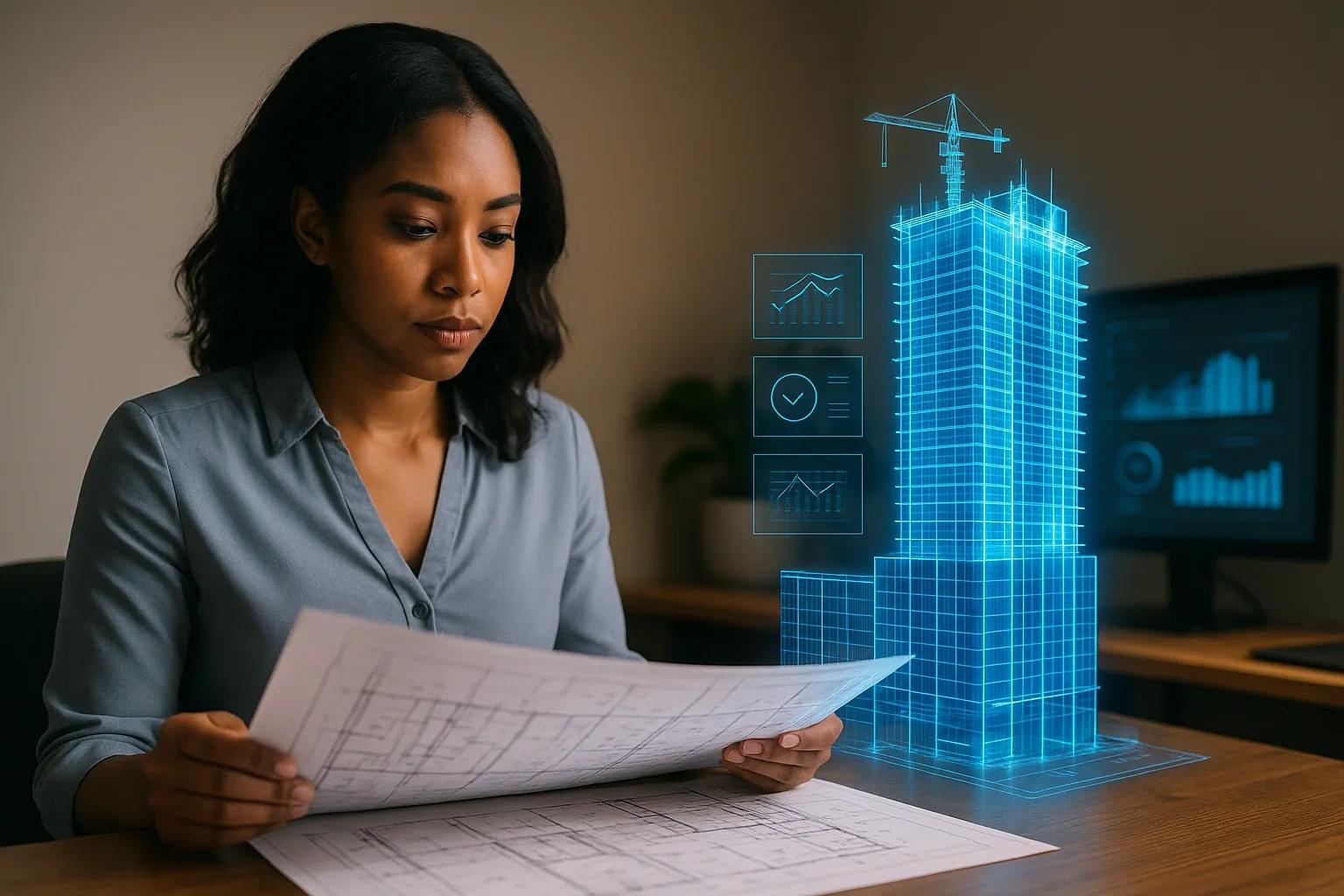
Digital twins are rapidly shifting construction from a reactive, fragmented process to a predictive, integrated ecosystem that connects physical assets with their digital counterparts. This shift is measurable: according to MarketsandMarkets, the global digital twin market in construction is projected to grow from $12.9 billion in 2024 to $35.5 billion by 2029 at a CAGR of 22.7%. The transformation is already visible across real projects, driving cost savings, reducing risks, and improving asset performance.
1. Design Optimization and Clash Detection
One of the earliest and most powerful applications of digital twins in construction is design optimization . Traditionally, construction projects relied on static blueprints, leading to costly errors when clashes between structural, mechanical, and electrical systems were discovered late in the field.
Digital twins built on BIM (Building Information Modeling) platforms enable engineers to simulate design interactions before physical work begins. For example, Crossrail in the UK created a comprehensive digital twin of London’s Elizabeth Line, allowing teams to identify design conflicts early. This approach helped reduce project delays and rework costs.
From static blueprints → to living, interactive models that continuously update.
Business outcome: Clash detection reduced rework costs by up to 40%, according to Dodge Data & Analytics.
2. Construction Site Monitoring and Safety
Digital twins also extend beyond the design phase into active construction. Using IoT sensors, drones, and real-time data streams, project managers can monitor progress, worker safety, and environmental conditions.
At Shanghai Tower , one of the tallest buildings in China, a digital twin was used to track material usage, labor activities, and structural performance during construction. Data from RFID tags and sensors provided daily progress insights and helped supervisors detect deviations in schedule or safety hazards.
Statistical evidence: McKinsey estimates that digital monitoring and automation can improve productivity by 14–15% on large construction sites.
Business outcome: Enhanced worker safety, reduced insurance claims, and fewer costly accidents.
3. Supply Chain and Material Tracking
One of the most complex challenges in construction lies in the supply chain . Delays in material delivery or shortages can halt entire projects, inflating costs. Digital twins offer visibility across logistics networks, integrating supplier data, shipping information, and site-level inventories into one predictive model.
Skanska , a global construction firm, has piloted digital twin solutions for supply chain transparency, enabling better scheduling and just-in-time deliveries. By simulating material flows, they minimized storage requirements on crowded sites while reducing carbon emissions from unnecessary transport.
From fragmented procurement → to predictive supply chain ecosystems driven by real-time data.
Business outcome: Projects achieved up to 10% reduction in overall material costs and avoided major schedule disruptions.
4. Asset Lifecycle and Facility Management
Digital twins don’t end with project delivery; they continue to add value across the entire lifecycle of a building or infrastructure asset . From predictive maintenance to energy optimization, facility managers can leverage digital twins for long-term performance gains.
Singapore’s Smart Nation initiative is a prime example. By creating city-scale digital twins, Singapore integrates geospatial data, BIM models, and IoT inputs to optimize building operations, traffic flows, and energy consumption.
From isolated facilities → to interconnected smart infrastructure that adapts dynamically.
Business outcome: Reductions of up to 20% in operational energy use across pilot projects.
5. Sustainability and Carbon Management
Construction is responsible for nearly 39% of global CO₂ emissions (World Green Building Council). Digital twins are now being applied to monitor, simulate, and reduce carbon footprints across projects.
For example, Royal BAM Group in Europe uses digital twin technology to model the carbon impact of different material and equipment choices during the planning stage. By comparing options virtually, they can choose the most sustainable path before construction begins.
Statistical evidence: Accenture reports that digital twins can help organizations reduce emissions by 16% through smarter design and resource optimization.
Business outcome: Sustainability targets are met while also saving on energy and material costs.
Implications for the Construction Sector
The adoption of digital twins is not just about technology, it is about reshaping the construction business model . Contractors are moving from “build and handover” to “build, monitor, and optimize.” Owners gain long-term cost savings and performance assurance, while contractors differentiate with data-driven services.
Three implications stand out:
Shift to service-based revenue models as firms offer monitoring and predictive maintenance.
Integration of geospatial intelligence for city-wide planning and resilience.
Upskilling of the workforce , as engineers must now interpret digital data alongside physical work.
According to Deloitte’s 2025 report, over 68% of surveyed construction businesses are either already using or actively planning digital twin deployments, signaling an irreversible momentum.
Outlook
Looking ahead, the combination of AI, IoT, and digital twins will make construction more adaptive and resilient. Imagine AI-driven digital twins predicting equipment failures, automatically adjusting project schedules, or recommending sustainable materials in real time. With the BIM market expected to reach $22.1 billion by 2032, integration with digital twins will only accelerate.
The trajectory is clear: what began as 3D visualization is now evolving into continuous intelligence platforms that unify design, construction, and operations.
Final Thoughts
Digital twins are no longer experimental. They are actively transforming how buildings and infrastructure are designed, built, and operated. Companies that delay adoption risk falling behind in an industry where efficiency gains of 20–50% are becoming standard. The urgency is not to panic, but to prepare, because the competitive advantage of tomorrow is already being built in the digital twin environments of today.