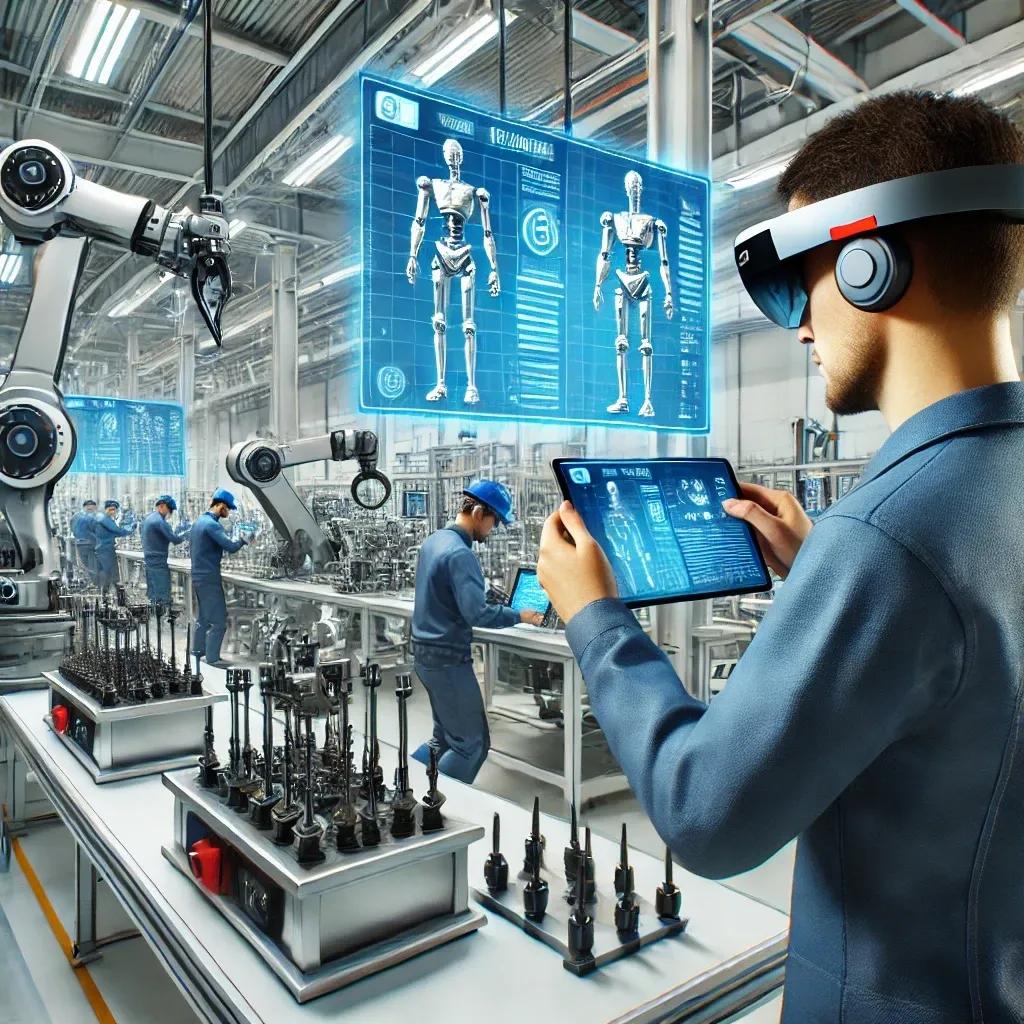
In today's highly competitive manufacturing environment, efficiency on the assembly line is crucial for maintaining profitability and market share. Traditional paper-based work instructions, though long-standing, have significant limitations, such as susceptibility to human error, difficulty in comprehension, and lack of real-time adaptability. With the advent of digital transformation in the manufacturing sector, there is an increasing shift towards the adoption of advanced technologies like 3D Visual Work Instructions. These modern tools have proven to be a game-changer, enhancing productivity on assembly lines by up to 20%.
The Shortcomings of Traditional Work Instructions
Traditional work instructions are typically delivered as printed documents or static digital files. While they serve as a guide for workers, these instructions often lack the clarity and detail needed to avoid mistakes in complex assembly processes. Key challenges include:
Ambiguity in Instructions : Textual descriptions can be vague, leading to varied interpretations among workers. This inconsistency increases the likelihood of errors during assembly.
Time-Consuming Comprehension : Workers often need to spend time deciphering the instructions, which slows down the production process.
Lack of Flexibility : In dynamic manufacturing environments, where processes may change frequently, updating and distributing new work instructions can be cumbersome.
Training Limitations : New workers often require extensive training to understand the nuances of the assembly process, which can result in a longer onboarding period and reduced initial productivity.
These limitations contribute to inefficiencies that can be mitigated by adopting 3D Visual Work Instructions.
Understanding 3D Visual Work Instructions
3D Visual Work Instructions are digital manufacturing tools that utilize 3D models to guide workers through assembly processes. These instructions are interactive and can be viewed on various devices, including tablets, laptops, and augmented reality (AR) headsets. The core components of 3D Visual Work Instructions include:
3D Models : Detailed, interactive 3D representations of the components to be assembled.
Step-by-Step Guidance : Clear, visual demonstrations of each assembly step, showing how components fit together.
Real-Time Updates : Instant updates to instructions can be pushed to workers, ensuring they always have the most accurate information.
Integration with Digital Twins : These instructions can be integrated with digital twin models of the assembly line, providing real-time feedback and optimization suggestions.
Boosting Productivity by 20% with 3D Visual Work Instructions
1. Reducing Human Error
One of the most significant benefits of 3D Visual Work Instructions is their ability to minimize human error. By providing workers with a visual representation of each step in the assembly process, the likelihood of mistakes is greatly reduced. Workers can see exactly how components should be assembled, eliminating the guesswork associated with traditional text-based instructions.
Impact on Productivity : Reduced error rates mean fewer instances of rework, which directly contributes to higher productivity. Workers spend less time correcting mistakes and more time moving forward with the assembly process.
2. Accelerating the Learning Curve
3D Visual Work Instructions are particularly beneficial for training new workers. The interactive nature of these instructions allows new hires to understand complex processes more quickly than if they were relying solely on written instructions or shadowing experienced workers. This acceleration of the learning curve ensures that new employees can become productive members of the team in a shorter amount of time.
Impact on Productivity : Faster onboarding reduces the time and resources required to bring new workers up to speed, leading to a more efficient assembly line overall.
3. Enhancing Comprehension and Retention
Research has shown that people retain visual information more effectively than text-based information. By presenting instructions in a visual format, workers are more likely to remember the steps they need to perform, even after viewing the instructions. Additionally, the ability to rotate and zoom in on 3D models allows workers to explore and fully understand complex components and assemblies.
Impact on Productivity : Improved comprehension and retention of instructions lead to faster execution of tasks and a reduction in the time spent revisiting instructions, thus speeding up the overall assembly process.
4. Enabling Real-Time Adjustments
Manufacturing processes are often subject to changes due to new product designs, material substitutions, or process improvements. With traditional work instructions, implementing these changes requires time to update documents and redistribute them to the workforce. In contrast, 3D Visual Work Instructions can be updated in real-time, ensuring that workers always have access to the latest information.
Impact on Productivity : The ability to adapt to changes quickly minimizes downtime associated with updating and disseminating new instructions, keeping the assembly line running smoothly and efficiently.
5. Supporting Continuous Improvement
3D Visual Work Instructions can be integrated with other digital manufacturing tools, such as digital twins and IoT devices, to support continuous improvement initiatives. By capturing data on worker performance and assembly times, these systems can identify bottlenecks and suggest optimizations to the assembly process.
Impact on Productivity : Continuous improvement driven by data analytics leads to incremental gains in efficiency, which, over time, can significantly boost overall productivity on the assembly line.
Case Study: Implementation of 3D Visual Work Instructions
Our 3D Visual Work Instructions platform has been deployed in several manufacturing facilities with impressive results. For example, a major automotive manufacturer implemented these instructions in their assembly line for electric vehicles. The introduction of 3D Visual Work Instructions led to a 20% increase in productivity within the first six months. Workers reported fewer errors, faster comprehension of new assembly tasks, and greater confidence in performing their duties.
The real-time update feature allowed the manufacturer to quickly roll out changes to the assembly process, ensuring that all workers were following the latest procedures. This agility not only improved productivity but also enhanced the overall quality of the final product.
In conclusion, the adoption of 3D Visual Work Instructions represents a significant advancement in digital manufacturing. By reducing human error, accelerating training, enhancing comprehension, enabling real-time adjustments, and supporting continuous improvement, these tools can boost assembly line productivity by up to 20%. As manufacturers continue to seek ways to improve efficiency and reduce costs, the transition from traditional work instructions to 3D Visual Work Instructions is not just a trend, but a strategic imperative for staying competitive in the modern industrial landscape.