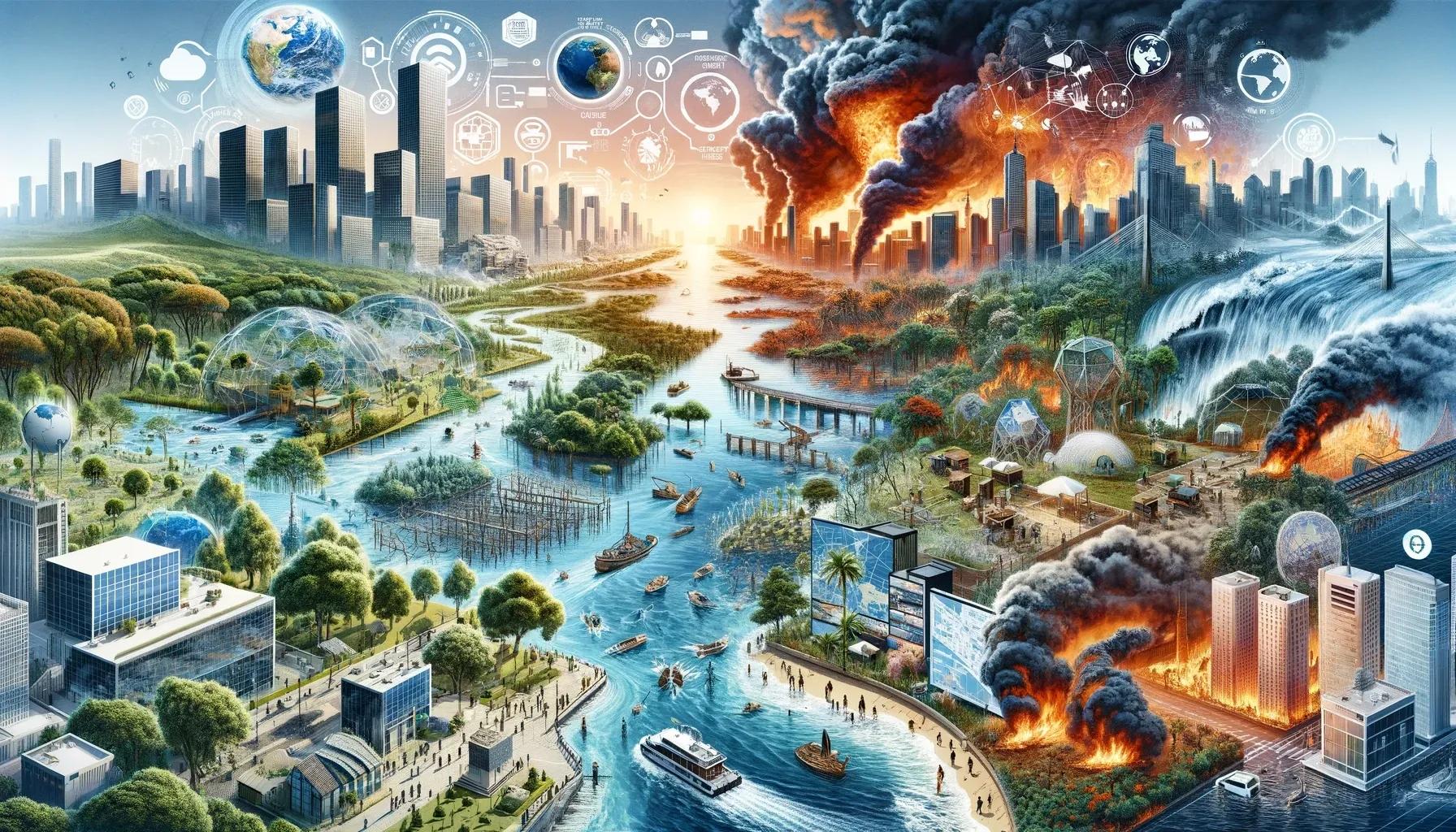
The year 2023 has been a stark reminder of the dynamic and often conflicting interplay between human-constructed landscapes and natural phenomena. Globally, and notably in India, the year has underscored the critical importance of integrating Geospatial and Building Information Modeling (BIM) technologies to effectively navigate and mitigate these challenges. This article delves into the significant clashes observed this year and explores how leveraging a diversified strategy encompassing geospatial and BIM technologies can offer viable solutions.
1. Extreme Weather Events and Infrastructure Vulnerabilities
Flooding: The devastating floods in Pakistan, Australia, and South Africa, as well as in Indian states like Assam and Bihar, have thrown into sharp relief the vulnerability of urban and rural infrastructures to extreme precipitation events. Inefficiencies in drainage systems and inadequate flood defenses have been key factors in the extensive damage caused, manifesting in loss of life, property, and mass displacements.
Heatwaves and Wildfires: Prolonged heatwaves in Europe, North America, and several Indian cities have strained power grids and led to water shortages, raising concerns about the resilience of existing infrastructure against climate-induced temperature extremes. Similarly, wildfires in California and other western US states, fueled by dry and hot conditions, have ravaged homes and ecosystems, highlighting the necessity for more robust fire management systems.
2. Urbanization and Environmental Degradation
Deforestation and Mangrove Destruction: The relentless deforestation in the Amazon and other regions, coupled with the destruction of mangroves for coastal development projects, continues to disrupt ecosystems and exacerbate climate change impacts. These actions not only threaten biodiversity but also diminish natural defenses against environmental hazards.
Water Scarcity: The overexploitation and pollution of water sources are emerging as critical challenges, stirring conflicts between communities and industries, especially in water-stressed regions.
3. Climate Change and Sea Level Rise
Coastal Erosion and Displacement: The threat of coastal erosion due to rising sea levels poses a significant risk to coastal communities and infrastructure worldwide. This phenomenon, coupled with climate-induced migration, is reshaping demographic patterns and necessitating new approaches to urban planning and disaster management.
Food Insecurity: Altered weather patterns and water scarcity are impacting agricultural productivity, leading to food insecurity, particularly in vulnerable regions.
Resolving the conflicts between the built environment and natural phenomena in India and globally requires a multi-pronged approach encompassing various levels and spheres. Here are some key steps:
1. Policy and Governance:
Strengthening environmental regulations: Implementing stricter environmental laws and ensuring their effective enforcement is crucial. This includes policies on deforestation, coastal development, water management, and air pollution control.
Investing in sustainable infrastructure: Designing and building infrastructure that is resilient to climate change and natural disasters while minimizing environmental impact. This includes flood-proof infrastructure, green buildings, and renewable energy sources.
Urban planning with nature-based solutions: Incorporating green spaces, rainwater harvesting systems, and natural drainage channels into urban design can mitigate flooding, improve air quality, and enhance biodiversity.
Promoting climate adaptation strategies: Developing and implementing plans to help communities adapt to the changing climate, including early warning systems, disaster preparedness measures, and climate-resilient agriculture practices.
2. Community Engagement and Education:
Raising public awareness: Educating people about the consequences of human actions on the environment and engaging them in environmental stewardship. This can be achieved through school curricula, public awareness campaigns, and community-based initiatives.
Empowering local communities: Working with communities to develop and implement solutions that address their specific needs and vulnerabilities. This could involve traditional ecological knowledge, participatory planning processes, and resource management initiatives.
Supporting vulnerable groups: Ensuring that climate change adaptation and disaster preparedness efforts prioritize the needs of marginalized communities, women, and children who are often disproportionately affected by environmental challenges.
3. Technological Innovation:
Investing in green technologies: Promoting research and development in renewable energy, sustainable materials, and climate-smart agriculture.
Utilizing data and technology for monitoring and prediction: Implementing systems to monitor environmental changes, predict extreme weather events, and guide decision-making for disaster preparedness and mitigation.
Promoting sustainable consumption and production: Encouraging businesses and individuals to adopt practices that minimize waste, conserve resources, and reduce their environmental footprint.
4. International Cooperation:
Sharing knowledge and best practices: Global collaboration and knowledge exchange are crucial for addressing the interconnected challenges of climate change and environmental degradation.
Providing financial and technical support: Developed countries can assist developing nations in adopting sustainable practices, building resilient infrastructure, and adapting to climate change impacts.
Strengthening international environmental agreements: Participating in and strengthening international treaties and agreements aimed at protecting the environment, reducing greenhouse gas emissions, and conserving biodiversity.
In conclusion, the year 2023 has vividly illustrated the urgent need for a cohesive, multi-faceted approach to resolve the conflicts between constructed environments and natural phenomena. Embracing geospatial and BIM technologies, alongside robust policy frameworks, community involvement, and international cooperation, can pave the way for sustainable development and a harmonious coexistence of human settlements with nature. This integrated approach is not just a choice but a necessity to ensure a resilient and sustainable future for all.